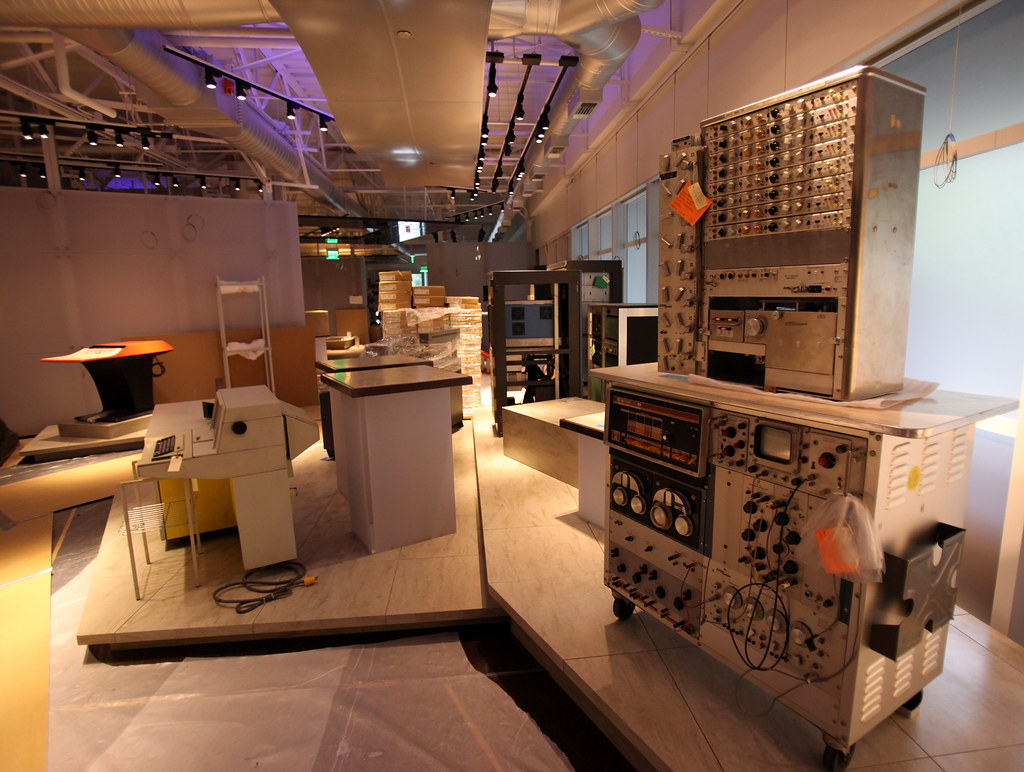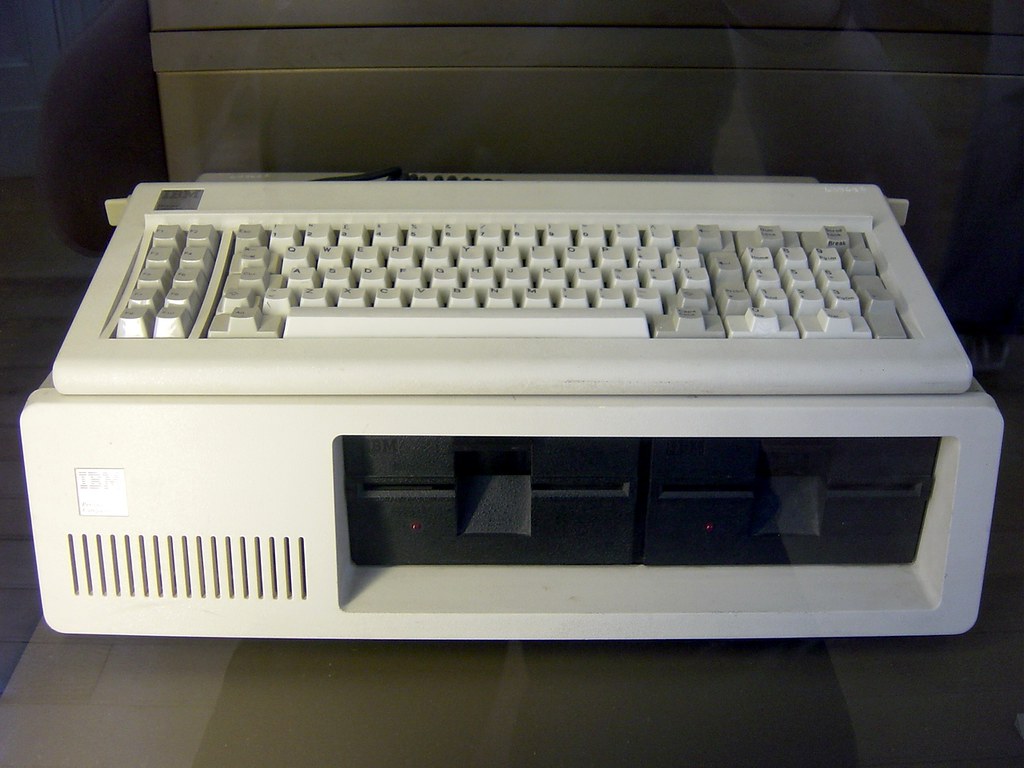
Above: the IBM Personal Computer, model 5150 (photo: Marcin Wichary, CC BY 2.0). In 1977, the founder of the giant minicomputer maker DEC was widely quoted as saying there was no reason anyone would want a computer in their home. He later said he'd been misunderstood. Either way, within a few years, millions of people had one. This last entry follows the computer's journey from hobbyist kit to the device in your pocket, with more New York in the story than you might expect.
A kit on a magazine cover
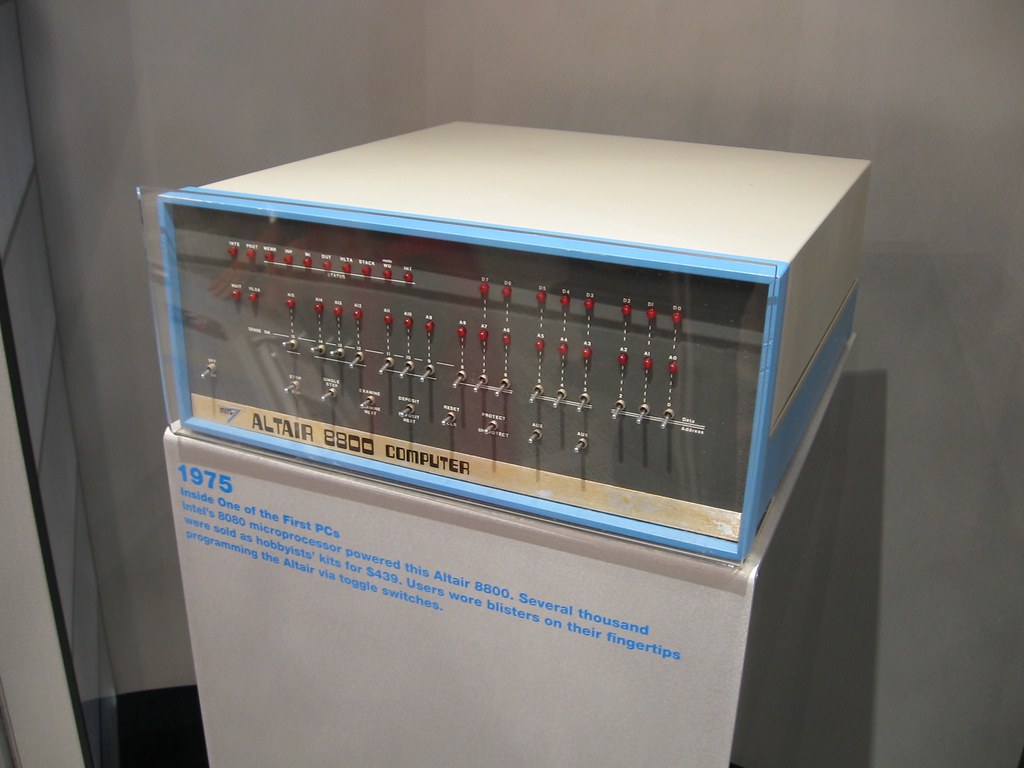
The January 1975 issue of Popular Electronics, published in New York, put a blue box with switches and lights on its cover: the Altair 8800, a computer kit from a small Albuquerque company called MITS, built around Intel's 8080 chip. It cost about $400 as a kit. It had no keyboard or screen, just switches for input and lights for output, a lot like our Bit Flipper. Hobbyists ordered thousands.
Two young programmers, Bill Gates and Paul Allen, wrote a version of the BASIC programming language for it and founded a company to sell it: Microsoft. In California, hobbyists formed the Homebrew Computer Club, where Steve Wozniak showed off the computer board that became the Apple I.
1977: the year computers became appliances
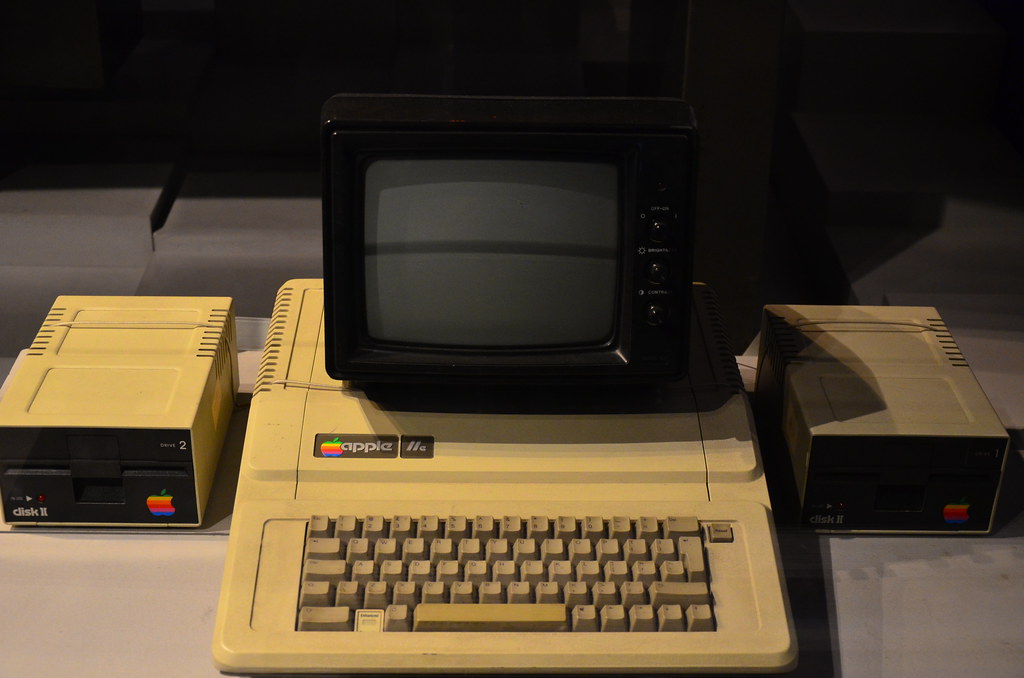
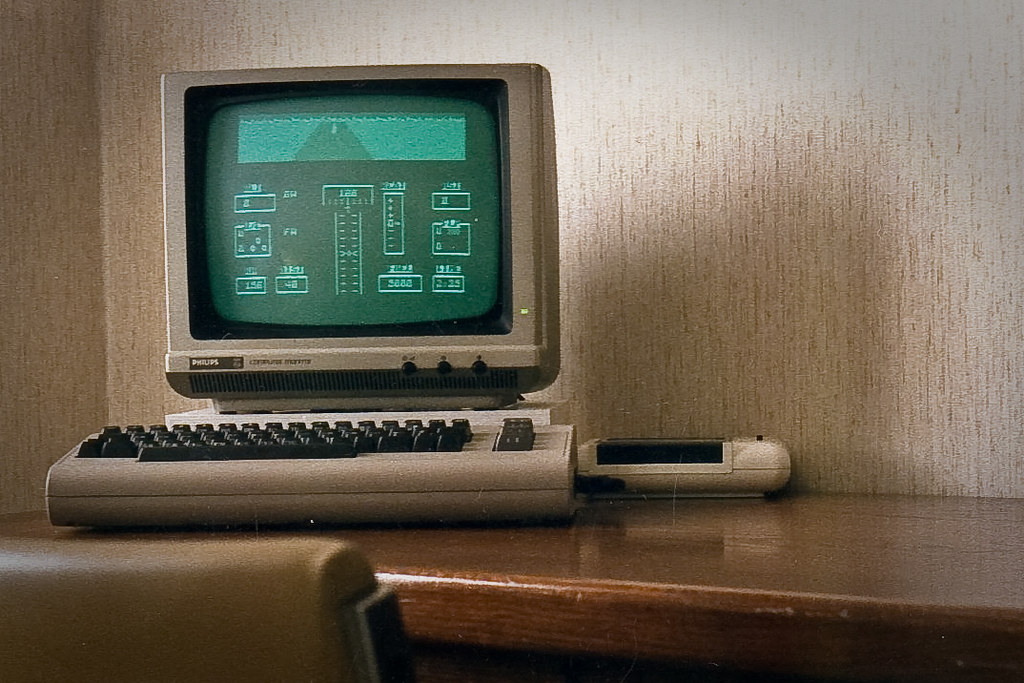
Three ready-made computers launched in 1977: the Apple II, the Commodore PET and the Tandy TRS-80. You could take them out of the box, plug them into a TV or monitor and start typing. The Apple II, with colour graphics and expansion slots, became a huge success, especially after the release of VisiCalc in 1979, the first spreadsheet program. Business people bought Apple IIs just to run it. It was the first "killer app."
IBM arrives, at the Waldorf-Astoria
For years IBM, the king of mainframes, ignored the hobbyist market. Then, on August 12, 1981, at a press conference at the Waldorf-Astoria hotel on Park Avenue, IBM introduced the IBM Personal Computer, model 5150, starting at around $1,565. To get to market quickly, IBM built it from off-the-shelf parts, an Intel 8088 processor and an operating system licensed from Microsoft (PC-DOS, also sold by Microsoft as MS-DOS), and published its technical details.
That openness changed everything. Other companies could build compatible machines, "IBM clones," and they did, by the million. Software makers wrote for one standard. Within a few years "PC" meant any IBM-compatible computer. At home, cheaper machines like the Commodore 64 (1982), one of the best-selling computer models ever, brought games and programming to millions of families. In January 1983, Time magazine, also based in New York, named the personal computer its "Machine of the Year" instead of a Person of the Year.
IBM's biggest PC decision was letting other people copy it.
Windows, mice and the Macintosh
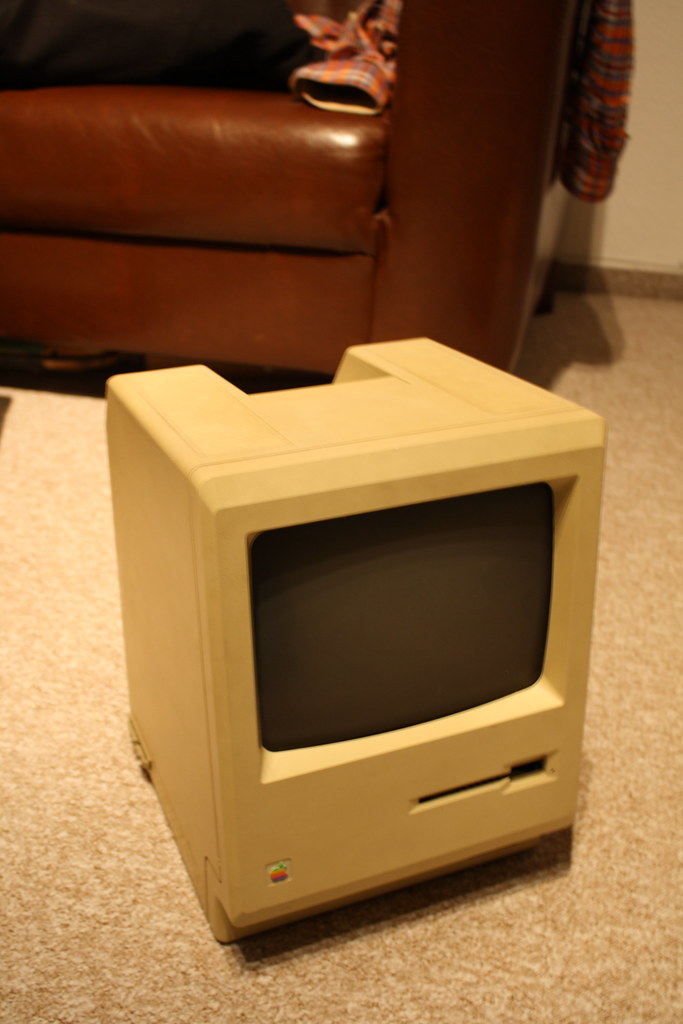
Researchers at Xerox's Palo Alto Research Center (PARC) had developed the graphical user interface in the 1970s: windows, icons, a mouse pointer. Apple brought it to the mass market with the Macintosh in January 1984, launched with a famous Super Bowl ad. Microsoft followed with Windows, which became dominant on PCs in the 1990s. The computer stopped being a box of commands and became a desktop of pictures.
Machine beats champion, in Manhattan
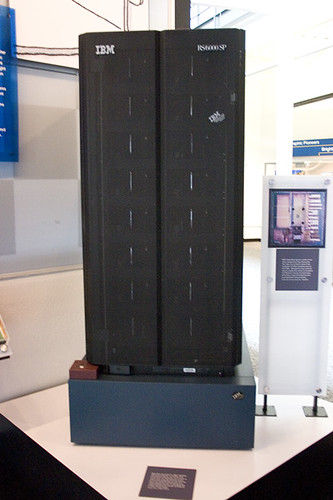
In May 1997, in a rematch held in a Manhattan skyscraper, IBM's chess computer Deep Blue beat world champion Garry Kasparov 3½–2½. It was the first time a computer had defeated a reigning world champion in a match under standard tournament conditions. Kasparov accused IBM of unfair play; IBM dismantled the machine. Fourteen years later, IBM's Watson beat human champions on the quiz show Jeopardy! in a match taped at IBM's research centre in Yorktown Heights, New York.
The web connects everything
In March 1989, at CERN near Geneva, British scientist Tim Berners-Lee proposed a system of linked documents for sharing information. By 1991 the World Wide Web was public, and the graphical Mosaic browser of 1993 made it easy for anyone. Personal computers became windows onto a global network. In the 1990s New York's tech scene, nicknamed "Silicon Alley," grew up around the Flatiron District and SoHo.
The computer goes into your pocket
On January 9, 2007, Apple introduced the iPhone, and smartphones quickly became the main computer for billions of people, many of whom never owned a PC. A typical phone today has a processor with billions of transistors, compared with the Intel 4004's roughly 2,300. Then came another shift: in November 2022, ChatGPT made large language models a household topic, and AI became the hottest new workload for computers of every size, from phones to the exascale machines in entry seven.
See it for yourself
Where can you see computer history in or near New York? The Computer History Museum in Mountain View, California, has the world's biggest collection, but closer to home, the Vintage Computer Federation runs a museum in Wall Township, New Jersey, and the National Museum of American History in Washington holds famous machines. Cornell Tech on Roosevelt Island carries the city's computing story forward. We're not affiliated with any of them.