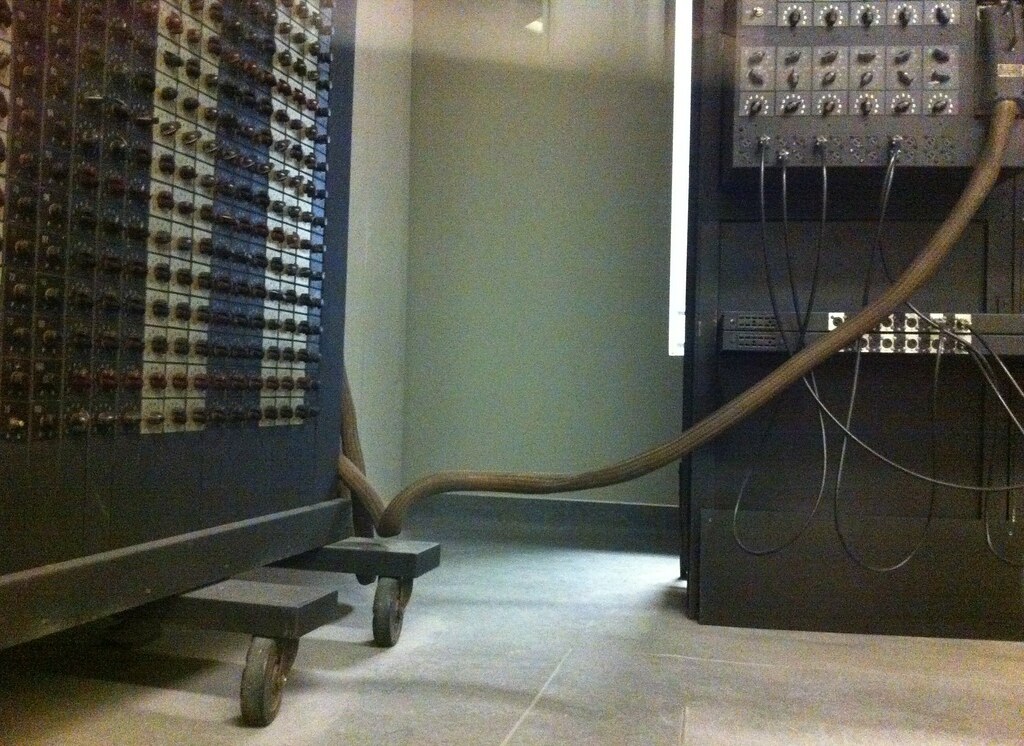
Above: panels of ENIAC on display (photo: Seth Tisue, CC BY-SA 2.0). In the space of about ten years, from the mid-1930s to the mid-1940s, the computer went from an idea in a mathematics paper to room-sized electronic machines working day and night. War was the accelerator. Governments needed codes broken, artillery tables calculated and bombs designed, and they were willing to fund strange new machines to do it.
A machine made of thought
In 1936, a 24-year-old Cambridge mathematician named Alan Turing published a paper called "On Computable Numbers." To answer a puzzle in mathematical logic, he imagined a simple theoretical device: a machine reading and writing symbols on an endless tape, following a table of rules. He showed that one such machine, a "universal" one, could imitate any other if given the right instructions. In a sentence: one machine, many programs. Every computer since is, in theory, a universal Turing machine with limited memory.
Relays and a forgotten pioneer
While Turing worked on theory, engineers built. In Berlin, Konrad Zuse completed the Z3 in 1941, a programmable, binary, electromechanical computer using about 2,600 telephone relays. It was destroyed in an air raid in 1943 and had little influence outside Germany at the time. In Iowa, John Atanasoff and Clifford Berry built the Atanasoff–Berry Computer between 1937 and 1942, an electronic machine for solving equations. It wasn't programmable, but a 1973 US court ruling credited Atanasoff with key ideas behind the electronic digital computer.
Colossus: the secret one
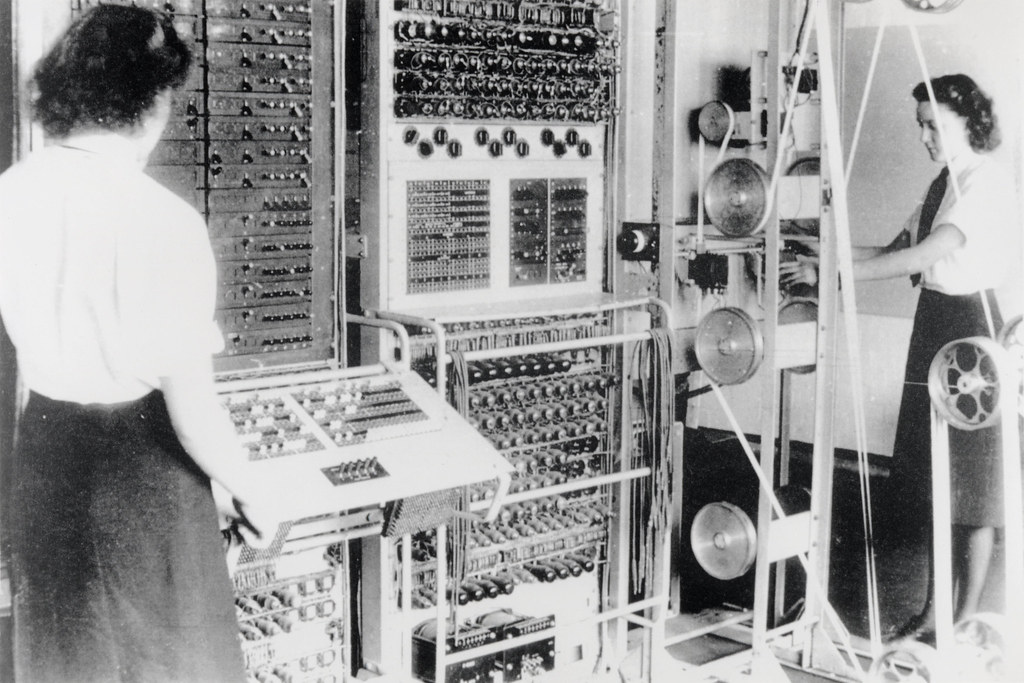
At Bletchley Park, Britain's code-breaking centre, mathematicians were attacking the Lorenz cipher, used by the German high command for its most secret messages. Breaking it by hand was too slow. A Post Office engineer named Tommy Flowers proposed a machine using around 1,600 vacuum tubes (valves). Experts doubted that so many tubes could run reliably. Flowers built it anyway, partly at his own expense.
Colossus was working by early 1944, and an improved Mark 2, with about 2,400 tubes, was ready days before the D-Day landings in June 1944. Ten were eventually in use. They read encrypted messages from punched paper tape at 5,000 characters a second. After the war, most were dismantled and the whole project was kept secret until the 1970s. A working reconstruction now runs at The National Museum of Computing at Bletchley Park.
The Harvard Mark I
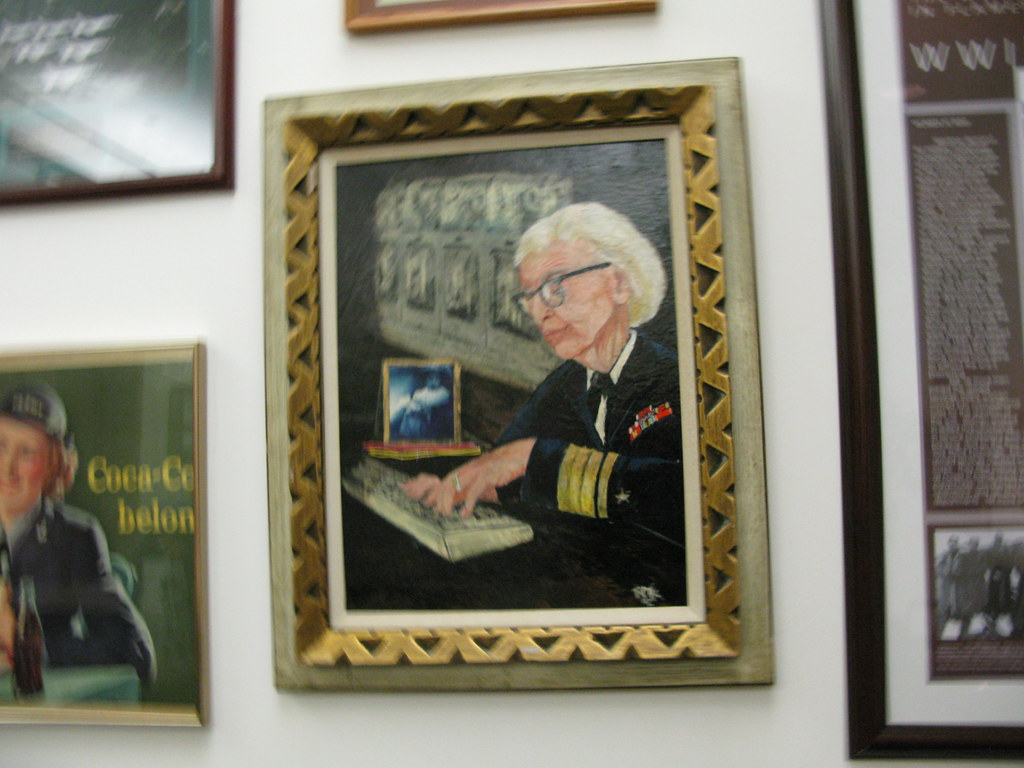
In the United States, Harvard's Howard Aiken persuaded IBM to build a giant electromechanical calculator. Completed in 1944, the Harvard Mark I was about 51 feet long, with hundreds of miles of wiring. It worked on calculations for the US Navy, including problems for the Manhattan Project. One of its programmers was a young naval officer named Grace Hopper, who later pioneered programming languages. A moth famously found stuck in a relay of its successor, the Mark II, in 1947 was taped into the logbook as the "first actual case of bug being found."
ENIAC
At the University of Pennsylvania's Moore School of Electrical Engineering in Philadelphia, physicist John Mauchly and engineer J. Presper Eckert proposed an all-electronic machine to calculate artillery firing tables for the US Army. Each table required thousands of trajectory calculations, done slowly by teams of human computers, mostly women.
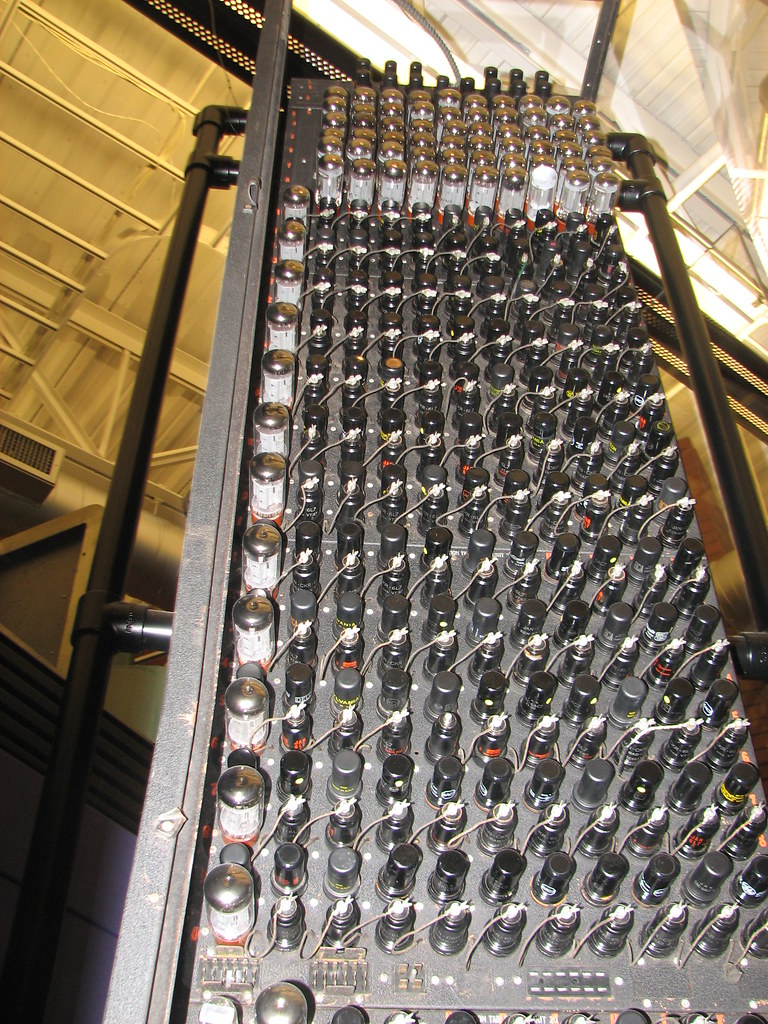
The result was ENIAC, the Electronic Numerical Integrator and Computer. It used about 17,500 vacuum tubes, weighed around 30 tons and filled a room of about 1,800 square feet. It could perform about 5,000 additions per second, thousands of times faster than earlier machines. It was publicly unveiled in February 1946, too late to help in the war, and went on to work on problems ranging from weather prediction to hydrogen bomb design. In February 2026, Penn marked ENIAC's 80th birthday (see our news).
ENIAC didn't have software. Reprogramming meant rewiring it by hand.
The ENIAC Six
Programming ENIAC meant setting thousands of switches and plugging cables between units, working from logical diagrams. The first people to master it were six women recruited from the Army's team of human computers: Kathleen McNulty, Jean Jennings (Bartik), Betty Snyder (Holberton), Marlyn Wescoff, Frances Bilas and Ruth Lichterman. They learned the machine from its wiring diagrams, with little documentation.
At the 1946 public demonstration, their trajectory program ran perfectly. Yet they weren't introduced, and for decades their role was overlooked; some photos were even captioned as if they were models posing with the machine. Historians and the ENIAC Programmers Project have since restored their place in the story. Betty Holberton went on to help develop early programming tools and languages.
The stored program
Even before ENIAC was finished, its designers knew rewiring was a bottleneck. In 1945, the mathematician John von Neumann circulated a draft report on a successor machine, EDVAC, describing a computer that stored its program in the same memory as its data. This "stored-program" design, often called the von Neumann architecture, became the blueprint for nearly every computer since. The first stored-program machine actually to run a program was the Manchester "Baby" in England, in June 1948.
In 1951, Eckert and Mauchly's company delivered the UNIVAC I to the US Census Bureau, one of the first commercial computers. The next year, CBS used a UNIVAC to predict the 1952 presidential election on live TV. It forecast an Eisenhower landslide early in the night, and was right. Computers had entered public life.